History
Nearly Two Centuries in One Room
From its beginning in 1750 West Street School students were almost exclusively from large farmer families, from approximately six to fourteen years old, brothers, sisters, cousins, and neighbors were taught all together in this single room school.
1750 — Colonial origins
A school older than the United States
The West Street School taught its first students in 1750. There was no Southington yet — the land along West Street was part of the town of Farmington in the British Colony of Connecticut.
Southington would not incorporate as its own town until 1779. By then the school had already taught a generation — and its earliest students went on to fight in the Revolutionary War.
School days
A pail of water and a pot-bellied stove
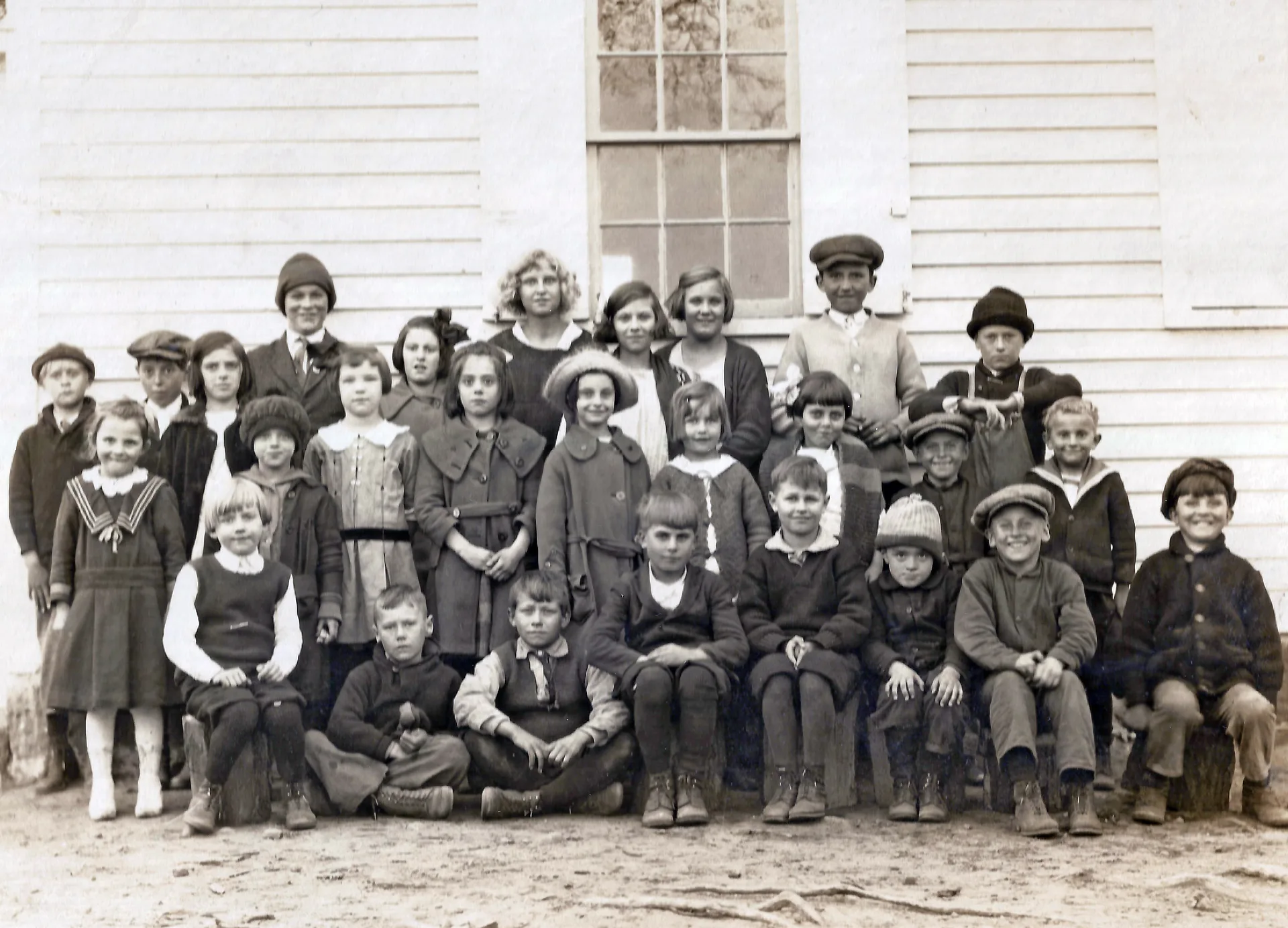
West Street School taught grades 1 to 8 in one room, with enrollment peaking at about 30 students. Many teachers boarded at a home that still stands across the street from the school.
The building
Twenty feet by twenty-four
The schoolhouse is a wood-framed clapboard building, 20 feet by 24, set with its gable end to the street on a rough-cut brownstone foundation. Its windows are six-over-six sash, and a gabled entry vestibule was added around 1900.
It has a single side entrance — unusual for its time, when most schools had separate boys' and girls' doors. Inside are beaded wainscot and chalkboards in wood frames. The building never had running water or plumbing.
Stewardship
From the ecclesiastical society to the National Register
The school was run by the Congregational Church's ecclesiastical society until 1798, then by school societies, and finally by the town's Board of Education.
It taught its last class in 1945, and the town consolidated its district schools after it closed. A 99-year lease arranged in 1947 kept the building in caring hands, and on December 1, 1988 the West Street School was listed on the National Register of Historic Places.
The road has changed more than the school has: in 1977 West Street was widened and lowered, leaving the schoolhouse about 12 feet above the roadbed.
On the record
Matters of record
- First students
- 1750
- Last class
- 1945
- National Register
- Listed December 1, 1988
- NRHP reference
- #88002689
Building details and school-day life are documented in the school's National Register nomination (National Park Service)(opens in a new tab).
Continue the story
More from the one-room school
Help write the next chapter
Nearly two centuries of teaching deserve more than peeling paint. Your gift — and your family's photographs and stories — keep the West Street School standing.